
Are you interested in agricultural drones? Well, drones can be expensive, especially the ones used for farming, like spraying drones, mapping, and garden inspections. The cost of these drones depends on their features and the payload they carry. The more advanced the drone, the higher its price will be.
But the cost of the drone is only one part of the equation. Knowing how to take care of your agricultural drone is essential to ensure its long lifespan. Proper maintenance and care can help you get the most out of your investment. Here are seven agriculture drone maintenance checklist for long life
7 Maintenance Steps for Prolonging Drone Lifespan
1. Make Sure to Clean the Motors Thoroughly
Cleaning the drone after every operation is one of the most important parts of effective agriculture drone maintenance.
During spraying operations, agriculture drones are constantly exposed to:
– Pesticide residue
– Fertilizer particles
– Mud and dust
– Moisture and dirt
If not cleaned properly, these contaminants may accumulate around motors, ESC systems, propellers, and frame joints.
How Dirt and Chemical Residue Affect Agriculture Drones
Chemical buildup and dirt accumulation may cause:
– Motor overheating
– Reduced propeller efficiency
– Corrosion on metal components
– Reduced flight stability
– Premature component wear
Over time, even small amounts of residue can negatively affect drone performance in the field.
2. Spray System and Nozzle Maintenance for Agriculture Drones
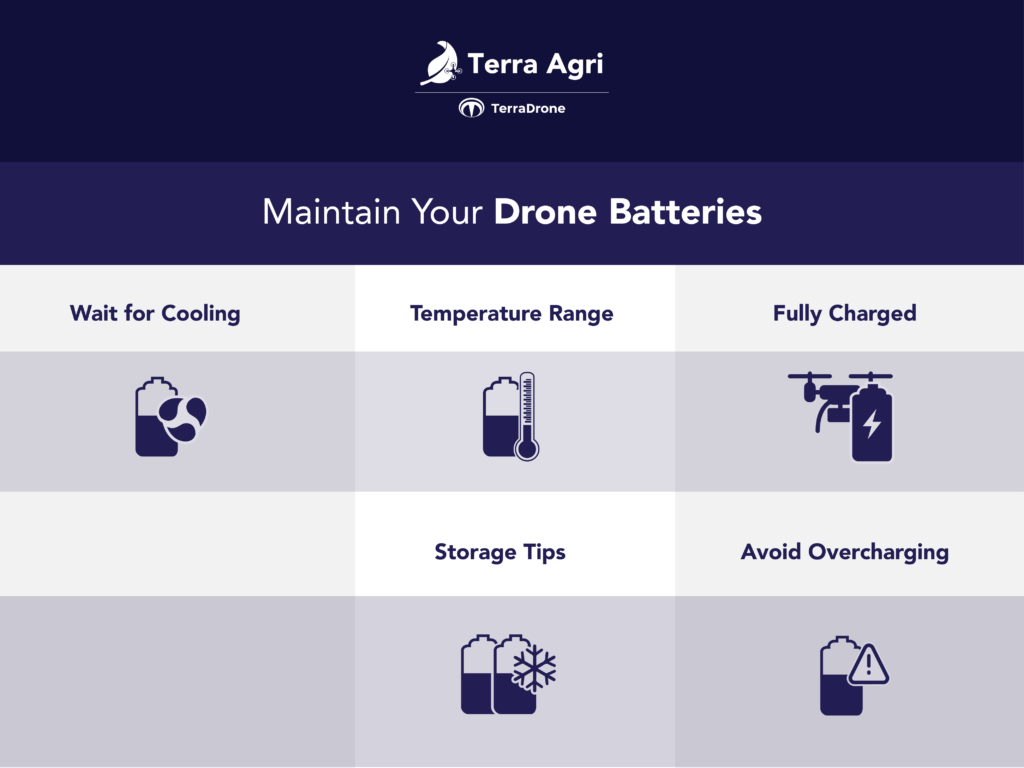
Taking good care of your drone’s batteries is vital to ensure safety and the best possible performance. Here are some essential tips to keep in mind:
– Wait for the battery to cool down before charging it after a flight, as setting it while it’s hot can cause damage.
– Always charge your batteries within the recommended temperature range to prevent overheating and other problems.
– It’s best to fly with fully charged batteries to ensure maximum flight time and performance.
– Store your batteries in a cool, dry place when you’re not using them to protect them from humidity and extreme temperatures.
– Don’t overcharge or charge your battery too quickly, as this can harm the battery.
3. Drone Battery Maintenance Best Practices
Consistent drone battery maintenance helps maintain reliable flight performance during daily operations.
Agriculture drone batteries typically operate under heavy loads and high temperatures, making proper battery care extremely important.
How to Extend Agriculture Drone Battery Lifespan
To improve battery lifespan:
– Avoid storing batteries fully charged
– Allow batteries to cool before charging
– Store batteries at recommended storage voltage
– Monitor battery cycle count regularly
– Avoid excessive heat exposure
Proper charging and storage habits can significantly improve long-term battery performance.
4. Inspect Drone Frames, Arms, and Propellers Regularly
Continuous vibration during operations can slowly loosen structural components.
As part of routine agriculture drone maintenance, operators should inspect:
– Frame screws
– Arm locks
– Landing gear
– Propeller mounts
– Payload mounting points
Signs of Frame and Propeller Damage
Operators should look for:
– Cracks on frame arms
– Loose mounting points
– Bent propellers
– Excessive vibration
– Abnormal motor sound
Damaged components should be replaced immediately to prevent further operational risks.
5. Update Agriculture Drone Firmware and Software
Firmware and software updates are an important part of modern agriculture drone maintenance.
Manufacturers regularly release updates to improve:
– Flight stability
– Navigation performance
– Obstacle avoidance
– Battery management
– Overall system reliability
When to Perform Sensor Recalibration
After major firmware updates, operators should recalibrate:
– IMU sensors
– Compass
– GNSS/RTK systems
– Altitude sensors
Recalibration helps maintain stable and accurate flight performance.
6. Sensor Calibration and RTK System Maintenance
Regular sensor calibration helps maintain accurate positioning and stable drone operation.
Agriculture drones rely heavily on:
– IMU sensors
– Compass systems
– GNSS positioning
– RTK correction systems
Maintaining RTK and GNSS Accuracy
For RTK-enabled agriculture drones:
– Check antenna condition regularly
– Ensure stable RTK correction signals
– Avoid operating near strong electromagnetic interference
– Verify GNSS positioning before takeoff
7. Agriculture Drone Pre-Flight and Post-Flight Checklist
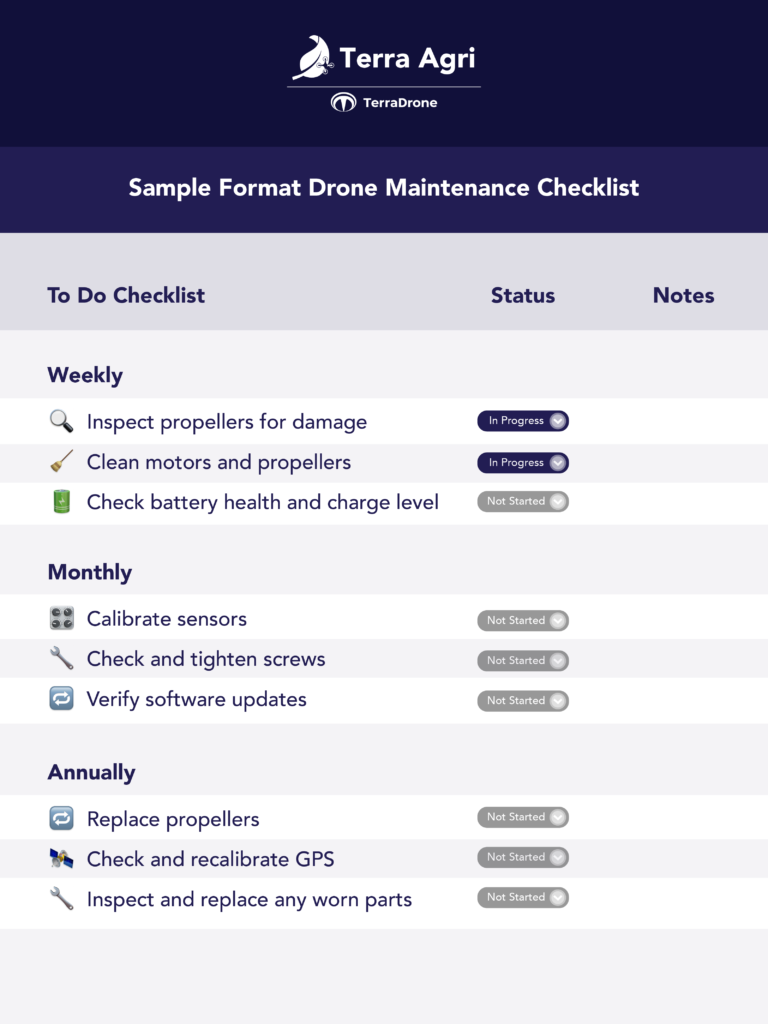
A proper drone pre-flight checklist is one of the simplest but most effective parts of agriculture drone maintenance. Routine inspections help operators detect issues early before they become major operational problems.
Essential Drone Pre-Flight Inspection Items
Before flight, inspect:
– Battery condition
– Propeller integrity
– Spray nozzles
– Motor condition
– Frame structure
– RTK/GNSS signal status
Post-Flight Inspection Routine
After flight:
– Check motor temperature
– Clean chemical residue
– Inspect frame condition
– Check for loose screws
– Review battery condition
Common Agriculture Drone Maintenance Mistakes
Many operational problems are caused by poor agriculture drone maintenance habits.
Some common mistakes include:
1. Ignoring pesticide residue after spraying
2. Skipping firmware updates
3. Flying with damaged propellers
4. Neglecting sensor calibration
5. Improper battery storage
6. Operating drones before components are fully dry
Avoiding these mistakes can significantly improve drone lifespan and operational reliability.
How Proper Agriculture Drone Maintenance Extends Drone Lifespan
Consistent agriculture drone maintenance helps:
1. Reduce unexpected downtime
2. Improve spraying accuracy
3. Maintain stable flight performance
4. Extend battery lifespan
5. Reduce long-term repair costs
Preventive maintenance is far more cost-effective than major component replacement caused by neglected inspections.
Conclusion
Proper agriculture drone maintenance is essential for achieving reliable flight performance, efficient spraying operations, and long-term equipment durability.
By following a structured agriculture drone maintenance checklist, operators can improve operational efficiency, minimize repair costs, and maintain safe field operations throughout daily missions.
As agriculture drone technology continues to evolve in 2026, consistent maintenance remains one of the most important factors for achieving reliable and efficient agricultural operations.