Have you ever replaced a drone propeller, only to find that the drone won’t take off or immediately starts spinning out of control? If so, there’s a good chance the problem isn’t the motor, battery, or flight controller. It could simply be because the CCW vs CW drone propeller was installed in the wrong position.
At first glance, all drone propellers look almost identical. As long as the size matches, many people assume they’re interchangeable. In reality, every multirotor drone relies on two different types of propellers: CW (Clockwise) and CCW (Counter Clockwise). Although they look similar, they’re designed for opposite directions of rotation and cannot be swapped.
Installing the wrong propeller can prevent a drone from taking off, cause unstable flight, or make it spin uncontrollably immediately after lift off. On agricultural drones carrying heavy payloads, this seemingly small mistake can lead to much more serious consequences.
What Is a CCW vs CW Drone Propeller?
A propeller converts the motor’s rotational force into thrust, allowing a drone to generate lift and fly.
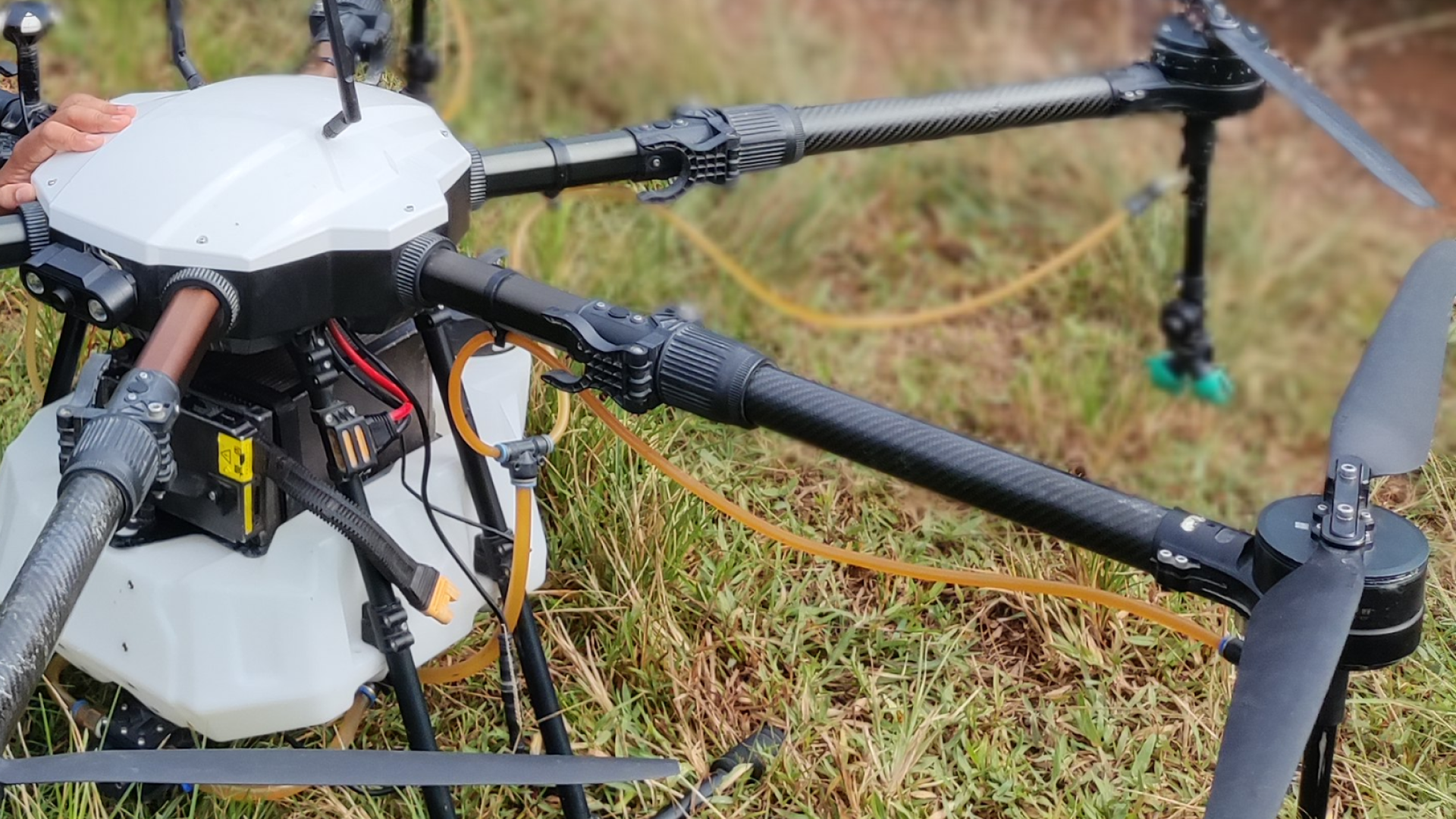
Agricultural drones typically use much larger propellers than consumer drones. Most range from 28 to 34 inches, feature two or three blades, have a foldable design, and are built to lift heavy payloads such as spray tanks and high capacity batteries.
So what do CW and CCW actually mean?
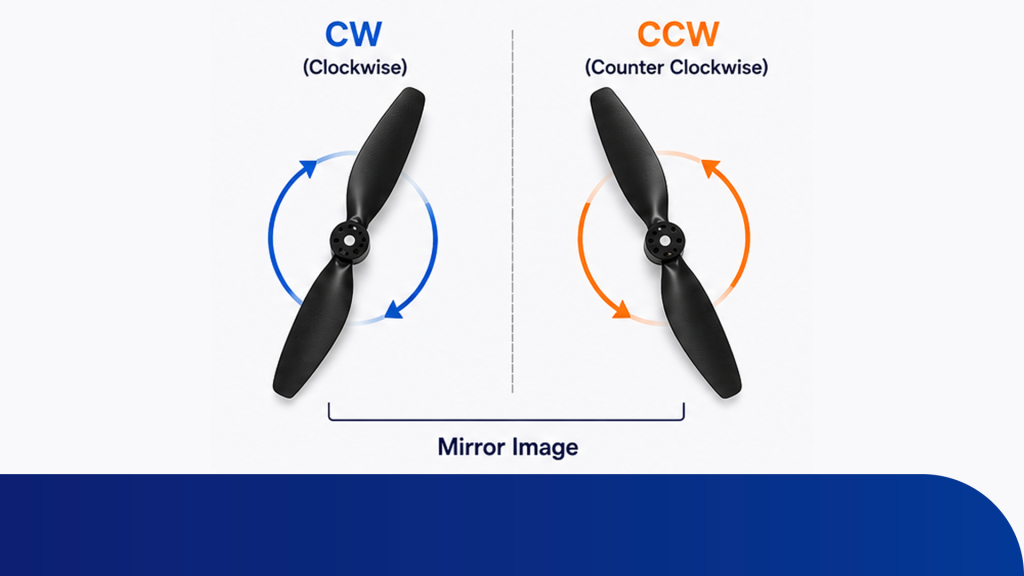
CW (Clockwise) is a propeller designed to rotate clockwise when viewed from above, while CCW (Counter Clockwise) is a propeller designed to rotate counter clockwise when viewed from above.
Every multirotor drone uses both types.
For example:
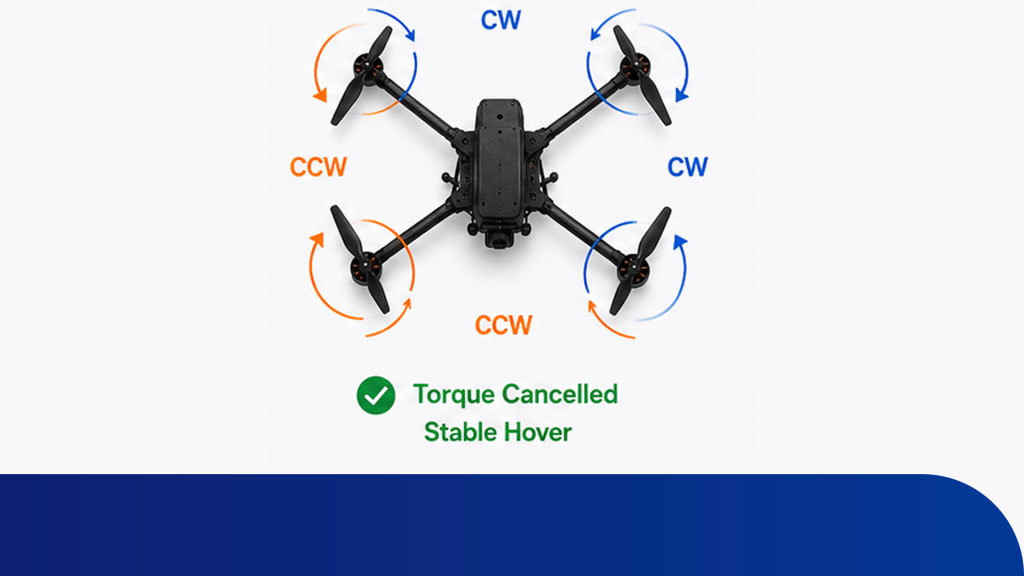
– Quadcopter → 2 CW + 2 CCW
– Hexacopter → 3 CW + 3 CCW
– Octocopter → 4 CW + 4 CCW
This arrangement isn’t arbitrary. It’s essential for maintaining flight stability.
How to Identify CW and CCW Drone Propellers
If you’re replacing a propeller, don’t rely on size alone. There are several ways to tell a CW propeller from a CCW propeller.
1. Check the Label
The easiest method is to look for the CW or CCW marking printed on the propeller hub or packaging.
Whenever possible, use these markings as your primary reference.
2. Look at the Blade Shape
CW and CCW propellers are mirror images of each other.
The leading edge of each blade is positioned differently depending on the intended direction of rotation.
3. Check the Thread Direction
On quick release propellers, the hub thread is also directional.
– CW motors typically use left hand threads.
– CCW motors typically use right hand threads.
This design helps prevent the propeller from loosening during operation.
Why Do Drones Need Both CW and CCW Propellers?
The answer comes down to torque.
When a motor spins a propeller, it pushes air downward to generate lift. According to Newton’s Third Law, the rotating propeller also creates an equal and opposite reaction torque on the drone’s frame.
That means:
– A CW propeller creates a counter-clockwise reaction torque.
– A CCW propeller creates a clockwise reaction torque.
If every propeller rotated in the same direction, all of those reaction torques would add together, causing the drone to spin continuously instead of hovering.
By balancing CW and CCW propellers across the frame, these opposing torques cancel each other out, allowing the drone to remain stable in flight.
They’re Not Just for Stability, They Also Control Yaw
Using both CW and CCW propellers isn’t only about balancing torque.
The flight controller also relies on this arrangement to control yaw, or the drone’s rotation around its vertical axis.
For example, when the drone needs to rotate clockwise, the flight controller slightly increases the RPM of the CCW motors while reducing the RPM of the CW motors. Overall thrust remains nearly constant, so altitude doesn’t change, but the difference in torque causes the drone to rotate.
Without a combination of CW and CCW propellers, controlled yaw movement simply wouldn’t be possible.
The Motor’s Rotation Direction Matters Too
Even if you install the correct propeller, it won’t work properly if the motor itself is spinning in the wrong direction.
Brushless DC (BLDC) motors, used on nearly all agricultural drones, have three phase wires. Their rotation direction is determined by the sequence in which those phases are energized.
Changing the motor direction is simple:
– Swap any two of the three phase wires, or
– Reverse the motor direction through the ESC firmware when using modern digital protocols such as DShot.
That’s why it’s important to verify the motor’s rotation whenever a motor is replaced.
A CW propeller installed on a motor that’s actually spinning CCW will perform no better than using the wrong propeller altogether.
Why Can’t You Swap CW and CCW Drone Propellers?
This is one of the most common misconceptions among new drone users.
Although CW and CCW propellers look similar, they’re not symmetrical.
Each blade is carefully designed with a specific airfoil profile, twist, and angle of attack to generate maximum thrust in only one direction of rotation.
In other words, CW and CCW propellers are mirror image components, not identical parts that can simply be flipped over.
Installing them incorrectly dramatically reduces aerodynamic efficiency, resulting in poor lift, unstable flight, or complete takeoff failure.
Checklist Before Installing a New Drone Propeller
Before flying, take a few minutes to verify the following:
1. Follow the manufacturer’s motor layout diagram rather than copying the previous installation.
2. Confirm the propeller is labeled CW or CCW correctly.
3. Verify the propeller diameter and pitch match the motor’s specifications.
4. Check that the motor rotates in the correct direction.
5. Inspect the hub, threads, and locking mechanism for wear or damage.
6. Replace any propeller that is cracked, bent, or has experienced a hard impact.
7. Store CW and CCW propellers separately to prevent accidental mix ups during maintenance.
Choosing the Right Replacement Propeller
When purchasing replacement propellers, don’t focus on size alone. Make sure you’re buying a matched CW and CCW pair that’s compatible with your drone’s motor and airframe.
For agricultural drones, carbon fiber composite propellers are generally recommended because they offer greater stiffness, improved balance, and better resistance to moisture and agricultural chemicals than standard plastic propellers.
If your drone uses motors such as the Hobbywing X8, T-Motor U8, or T-Motor U10, choosing the correct CW and CCW propeller pair will help ensure safe installation, reliable performance, and longer service life.