Pengelolaan perkebunan kelapa sawit di Malaysia terus berkembang. Operasi lapangan tidak lagi dinilai semata-mata berdasarkan tingkat penyelesaian atau kecepatan. Saat ini, tim manajemen lebih berfokus pada konsistensi, keterlacakan, dan pelaksanaan yang dapat diukur.
Operasi penyemprotan berada di pusat transisi ini. Baik untuk aplikasi nutrisi maupun pengendalian hama, perkebunan harus memastikan bahwa perlakuan diberikan secara merata, pada waktu yang tepat, dan dengan dokumentasi yang memadai.
Di sinilah peran drone penyemprot di Malaysia menjadi semakin relevan. Pergeseran ini bukan hanya soal mekanisasi. Ini tentang membangun sistem operasional yang lebih terstruktur dan dapat diverifikasi, yang selaras dengan praktik pertanian presisi modern.
Tekanan Operasional: Ketepatan dan Dokumentasi
Kebun kelapa sawit modern beroperasi di lahan yang luas dengan banyak blok, ketinggian pohon kelapa sawit yang bervariasi, dan kondisi medan yang beragam. Dalam metode penyemprotan manual, seringkali muncul beberapa kendala struktural:
– Variasi dalam distribusi tetesan
– Ketinggian semprotan yang tidak konsisten di atas tanah yang tidak rata
– Zona yang tumpang tindih atau terlewat
– Visibilitas terbatas terhadap cakupan sebenarnya
– Pelaporan manual dengan jejak audit yang lemah
Seiring dengan semakin ketatnya kerangka kerja tata kelola dan standar keberlanjutan, ketidakkonsistenan ini menciptakan titik buta operasional.
Solusi penyemprotan perkebunan yang terstruktur harus mengurangi variabilitas sekaligus meningkatkan kualitas dokumentasi.
Inilah mengapa penyemprotan menggunakan drone pertanian semakin banyak diterapkan di perkebunan-perkebunan Malaysia.
Mengapa Penyemprotan Drone Terstruktur Meningkatkan Efektivitas Pengendalian
Drone penyemprot yang dikonfigurasi dengan tepat di Malaysia memperkenalkan pelaksanaan yang dapat diprogram ke dalam alur kerja perkebunan.
Dengan misi titik jalan yang telah ditentukan, pengaturan tetesan yang tetap, dan laju aliran yang terkendali, penyemprotan menjadi proses yang dapat diulang, bukan lagi kegiatan lapangan yang bervariasi.
Keunggulan teknis utama meliputi:
– Ukuran tetesan yang dapat disesuaikan untuk mengoptimalkan daya rekat pada kanopi
– Konfigurasi multi-nozzle untuk pengendalian distribusi tetesan yang seimbang
– Penerbangan ketinggian rendah yang stabil untuk menjaga deposisi yang konsisten
– Pencatatan penerbangan berbasis GPS untuk eksekusi yang dapat dilacak
– Kemampuan sistem drone RTK untuk meningkatkan akurasi rute
– Pengendalian aliran cerdas terintegrasi untuk output yang stabil
Kombinasi ini memperkuat disiplin operasional dan meningkatkan pengawasan manajemen selama setiap operasi penyemprotan perkebunan.
Studi Kasus: Pengendalian Ulat Kantong yang Terstruktur di Malaysia Utara dan Timur
Serangan ulat daun tetap menjadi ancaman biologis yang berulang di perkebunan-perkebunan di wilayah utara dan timur Malaysia. Jika tidak ditangani, aktivitas makan larva akan mengurangi luas permukaan daun dan berdampak pada kesehatan pohon kelapa sawit secara keseluruhan.
Intervensi dini sangat penting. Namun, penanganan yang efektif memerlukan penyebaran bahan kimia yang merata di seluruh permukaan kanopi tempat larva berkumpul.
Latar Belakang
Sebuah grup perkebunan mendeteksi serangan pada tahap awal di beberapa blok yang berdekatan. Meskipun tim manual tersedia untuk penyemprotan kelapa sawit, manajemen menyadari tantangan yang berulang:
– Cakupan kanopi yang tidak merata
– Penetrasi tetesan yang tidak konsisten
– Verifikasi zona yang disemprot terbatas
– Konsolidasi dokumentasi yang tertunda
Alih-alih hanya berfokus pada kecepatan, perkebunan tersebut bertujuan untuk meningkatkan konsistensi aplikasi dan kualitas dokumentasi.
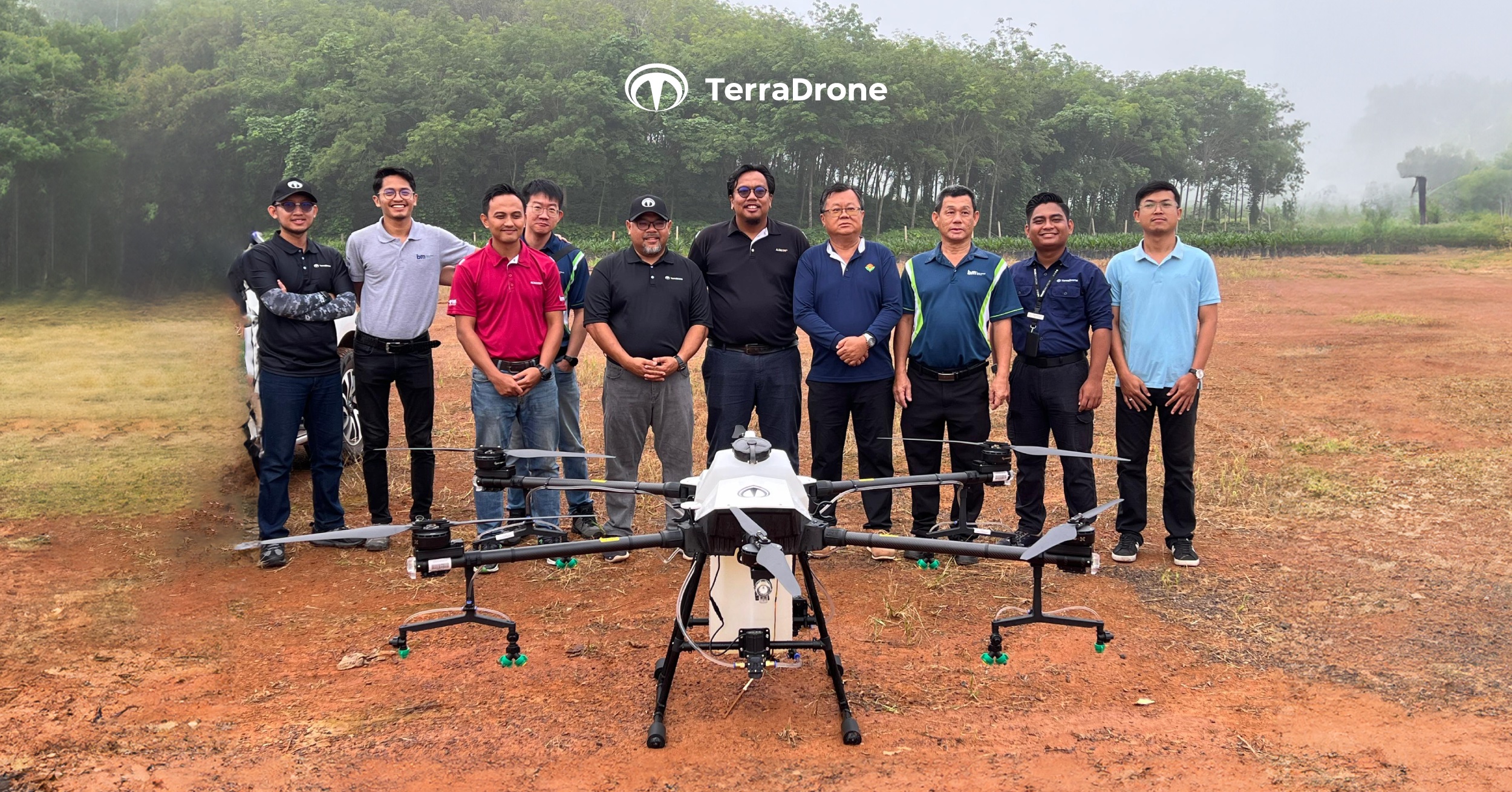
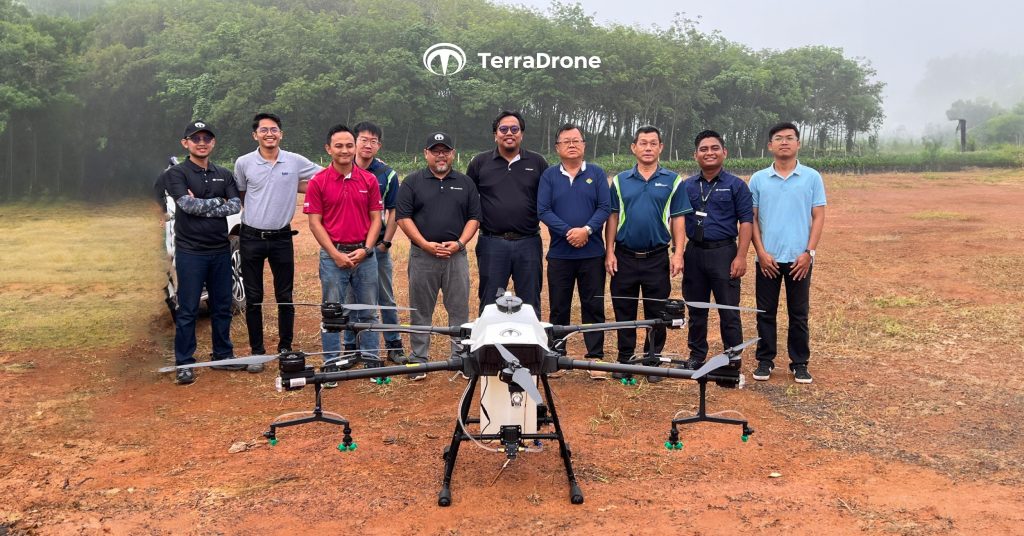
Tim manajemen memperkenalkan Terra Agri G30, sebuah drone industri untuk kelapa sawit, sebagai bagian dari program penyemprotan udara yang terstruktur.
Strategi Pelaksanaan
Zona yang terinfestasi terlebih dahulu dipetakan dan dikategorikan. Misi penerbangan dikonfigurasi menggunakan rute titik jalan yang telah ditentukan sebelumnya untuk memastikan cakupan yang sistematis.
Platform Terra Agri G30 memungkinkan operator untuk menetapkan parameter aplikasi tetap, termasuk ukuran tetesan dan laju aliran. Sistem pompa ganda tanpa sikatnya menjaga keluaran cairan tetap stabil, sehingga mengurangi fluktuasi selama siklus penyemprotan yang lama.
Konfigurasi enam rotor memastikan penerbangan ketinggian rendah yang stabil, sehingga tetesan dapat tersebar secara merata di seluruh daun kelapa sawit. Menjaga ketinggian aplikasi yang stabil sangat penting untuk memastikan kontak permukaan pada lapisan kanopi atas tempat larva mencari makan.
Penentuan posisi yang dibantu RTK meminimalkan penyimpangan rute dan tumpang tindih. Setiap misi menghasilkan log penerbangan berbasis GPS, sehingga memperkuat standar dokumentasi yang diharapkan dari layanan penyemprotan drone profesional di Malaysia.
Pengamatan Lapangan
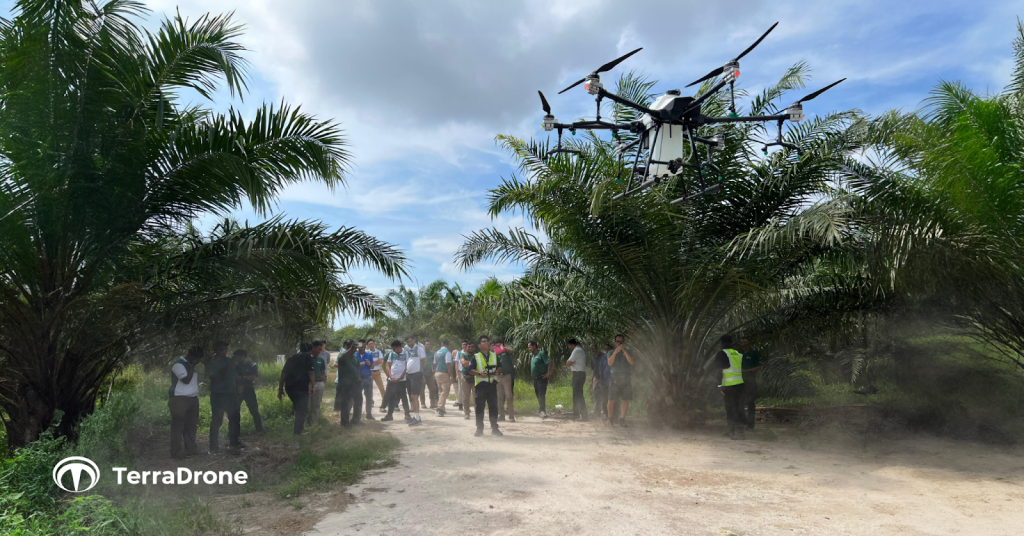
Selama proses penyemprotan, tim teknis perkebunan mengamati peningkatan keseragaman distribusi semprotan dibandingkan dengan operasi manual sebelumnya.
Spektrum tetesan yang dapat disesuaikan mendukung daya rekat yang lebih baik sekaligus mengurangi penyimpangan (drift) dalam kondisi angin sedang. Pendekatan titik waypoint yang terstruktur mengurangi celah yang tidak tersemprot dan zona tumpang tindih.
Parameter aplikasi tetap konsisten di seluruh blok, sehingga meningkatkan konsistensi antar siklus.
Dokumentasi juga sama pentingnya. Catatan misi digital memungkinkan manajemen untuk memverifikasi jadwal pengendalian hama dan area cakupan. Hal ini memperkuat pemantauan internal selama evaluasi pasca-pengendalian.
Drone penyemprot di Malaysia tidak menggantikan strategi pengendalian hama terpadu. Sebaliknya, drone tersebut meningkatkan kualitas pelaksanaan dalam kerangka kerja pengendalian hama yang lebih luas.
Dampak Operasional
Setelah penerapan, kelompok perkebunan melaporkan peningkatan kualitatif dalam hal:
– Konsistensi penyemprotan di seluruh blok yang terkena dampak
– Keyakinan terhadap kualitas cakupan kanopi
– Kejelasan dokumentasi untuk tinjauan internal
– Respons yang lebih cepat antara deteksi serangan hama dan penanganan
– Pengurangan paparan operator selama aplikasi bahan kimia
The system functioned not only as an aerial tool but as a structured control mechanism supporting modern agricultural drone spraying operations.
Perspektif Strategis
Penggunaan drone penyemprot di Malaysia mencerminkan pergeseran yang lebih luas menuju pelaksanaan yang terukur dan pengelolaan lahan yang terstandarisasi.
Platform seperti Terra Agri G30 menunjukkan bagaimana sistem drone industri dapat mendukung:
– Alur kerja operasi penyemprotan perkebunan yang terstruktur
– Kesesuaian yang lebih kuat terhadap kepatuhan
– Pelacakan dokumentasi yang ditingkatkan
– Konsistensi aplikasi yang lebih baik
Seiring dengan prioritas perkebunan terhadap tata kelola, keberlanjutan, dan transparansi operasional, penyemprotan berbasis drone semakin diintegrasikan sebagai alat manajemen perkebunan inti, bukan sekadar teknologi pelengkap.
Konsultasi Teknis
Perkebunan yang sedang mengevaluasi strategi pengendalian hama atau inisiatif peningkatan dokumentasi dapat memperoleh manfaat dari pendekatan penerapan drone yang terstruktur.
Tim kami menyediakan konsultasi teknis mengenai penerapan Terra Agri G30 dalam kerangka operasional yang disesuaikan dengan kondisi perkebunan di Malaysia, termasuk struktur kanopi, tata letak blok, dan protokol penyemprotan.
Siap untuk Memperkuat Operasi Penyemprotan Anda?
Jika perkebunan Anda sedang meninjau strategi pengendalian ulat kantong atau beralih ke sistem drone penyemprotan yang lebih terstruktur di Malaysia, hubungi tim teknis kami.